Planters
Estate LeadershipSeasoned estate superintendents with decades of commercial tea experience, managing workforce logistics, plucking intervals, and estate profit centers.
Rapidly improving plantation profitability, soil health, and drought resilience with proven, low-cost regenerative technologies—eliminating toxic herbicides while revitalizing depleted estates.

Healthy, chemical-free tea bushes protected by living soft weed microclimate and enriched microbial horizons.
Dry spell soil water retention
In-situ organic compost cycling
Bridging 30+ years of high-elevation plantation leadership with rigorous academic inquiry and empirical agro-ecological science.

Winner of the Presidential Green Award (2016) for Best Sustainable Farming Model in Sri Lanka & Twin Awards at the Merrill J. Fernando Eco-Innovation Awards.
As a veteran estate superintendent and empirical researcher, Mahendra Peiris pioneered a revolutionary paradigm shift in commercial tea: replacing toxic, costly agro-chemicals with intelligent, self-sustaining weed ecology. By understanding the symbiotic relationships between soft weed covers, root mycorrhizae, and soil water mechanics, he demonstrated that tea lands can achieve higher profitability while reversing land degradation.
• B.Sc. (Honours) in Agriculture.
• M.Sc. in Biodiversity, Ecotourism & Environment Management.
• Currently reading for Ph.D. on climate-smart commercial tea systems.
• Nominee, Global Tea Sustainability Award (2016) by Rainforest Alliance.
• Featured in Rainforest Alliance General Inspirational Video (2017).
• Twin Awardee, Merrill J. Fernando Eco-Innovation (2016).
Combining deep, on-the-ground commercial estate management with peer-reviewed scientific methodology—delivering actionable interventions that work in rugged plantation terrain.
Directing cross-functional research, field trials, and corporate estate transitions across all tea districts.
Seasoned estate superintendents with decades of commercial tea experience, managing workforce logistics, plucking intervals, and estate profit centers.
Ph.D. candidates and university scientists monitoring soil microbial respiration, active carbon sequestration, and weed community succession metrics.
Pioneers of low-cost mechanical weeding implements, ergonomic organic biomass processors, and non-invasive topsoil aeration systems.
On-site master instructors conducting hands-on field workshops in Sinhala, Tamil, and English, bridging boardroom strategy to grassroots estate teams.
Disseminating empirical breakthrough findings through high-impact international journals, national environmental press, and educational case studies.
A systematic, low-cost 3-year phased transition that safely untangles commercial tea estates from chemical dependence, converting weed biomass into continuous profit.
Chemical spray bans begin immediately. Estate labor is deployed with surgical precision: soft, non-competitive weeds are meticulously preserved, while noxious species are harvested and composted right on the field.

As the soft weed carpet densifies, it establishes a self-perpetuating ecological barrier. Sunlight cannot penetrate to trigger dormant noxious seeds, cutting weeding labor requirements dramatically.

Full ecosystem equilibrium achieved. Tea bushes exhibit dense, vibrant flush with superior succulent leaf quality, higher plucking density, and resilience against severe multi-month droughts.

Field-tested modules designed for corporate regional plantation companies (RPCs), private tea estates, smallholders, and agricultural development agencies.
Rapid operational turnaround for debilitated, low-yielding tea divisions. Restores plant vascular vigor, optimizes tipping height, and re-engages dormant bush potential for a minimum 15–20% green leaf surge.
Pro-nature moisture conservation protocols that insulate plantations against prolonged rainless spells, scorching dry winds, and sudden monsoon shifts, preventing bush dieback and leaf loss.
Accelerating depleted topsoil microbial respiration and mineral bioavailability by recycling 12 to 15 tons of weed biomass per hectare directly back into soil organic matter every year.
Direct field immersion training delivered fluently in Sinhala, Tamil, and English. We train superintendents, field officers (Kanganies), and weeding/plucking crews right on the estate contours.
Adjust the sliders to model your plantation's acreage and current chemical expenditures. Discover how much capital can be reclaimed through herbicide elimination and 20% crop gains.
Listen directly to commercial planters, smallholder farmers, and agricultural workers who implemented the Eco Immuni framework and witnessed thriving estates.
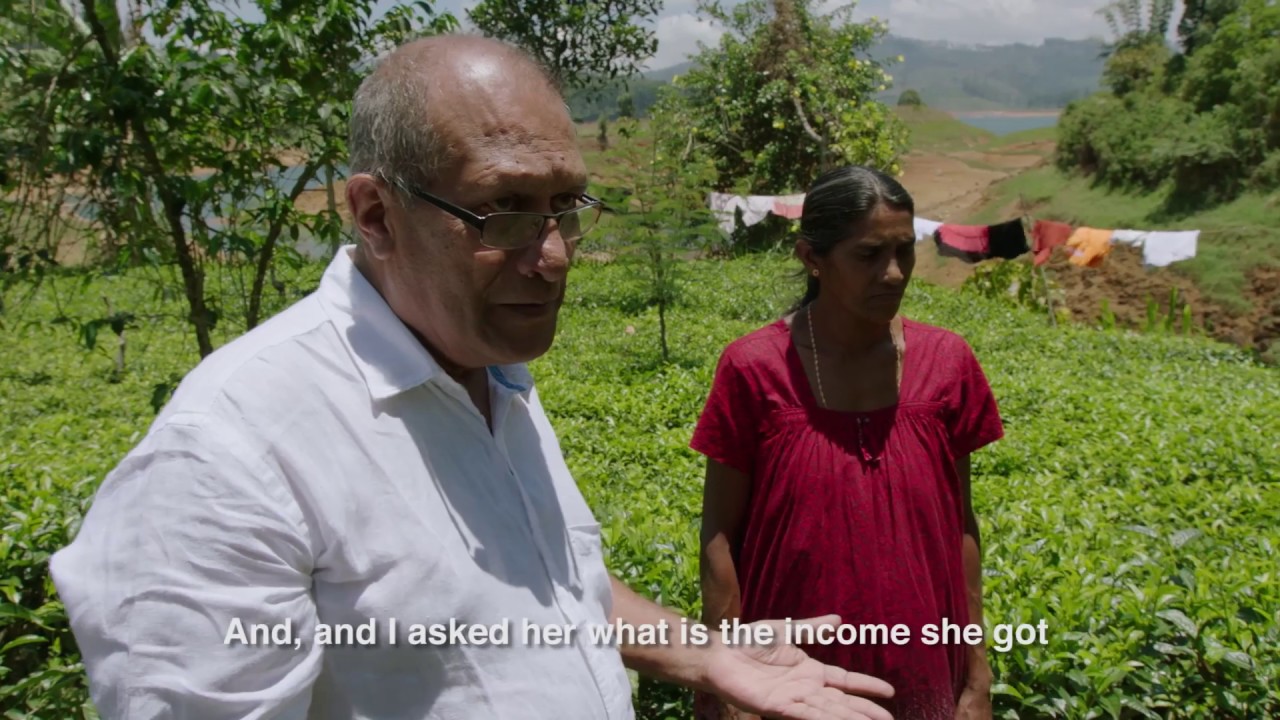 Watch Showcase
"We had lost hope in continuous chemical spraying as our bushes turned yellow and weeds grew tougher. Within months of adopting Mahendra's weed management, our soil deepened, costs vanished, and our harvest bounced back."
 Watch Showcase
"During the severe drought that crippled neighbouring divisions, our blocks under the Eco Immuni system remained lush green. The soft weed carpet kept the soil cool and moist. Our yield didn't collapse—it grew."
"The elimination of herbicides saved our division millions of rupees annually. More importantly, our plucking workers no longer complain of skin rashes or respiratory distress. It is a genuine win-win."
"By preserving soft weeds like Centella and Drymaria, we noticed soil erosion stopped completely even during monsoon cloudbursts. The streams below our fields are crystal clear."
"Scientific verification showed that organic matter jumped from 1.4% to 3.8% in just two seasons. Earthworms are back. You can sink your fingers 6 inches into the soil effortlessly."
Explore our peer-reviewed literature, global sustainability awards, and international media features spotlighting Mahendra Peiris's ground-breaking methodologies.
Gunarathne, Cooray, Perera, & Peiris (2025): "Climate change education and human well-being in the global south: a framework for sustainable development in developing countries."
Conferred by the Ministry of Mahaweli Development and Environment in Sri Lanka, honoring Mahendra Peiris for inventing and proving the nation's premier regenerative agriculture model.
Official global nomination recognizing outstanding ecological stewardship, chemical elimination, and soil conservation leadership in high-elevation tea plantations.
Awarded double honors by Dilmah Conservation for breakthrough climate-smart tea technologies and groundbreaking regenerative organic soil management designs.
Featured internationally as a worldwide beacon of climate-smart farming, showing how Sri Lankan tea estates can flourish while embracing living biodiversity.
Monitoring and Evaluating Climate Communication and Education (MECCE) international case study featuring practical regenerative tea transitions and community impact.
Comprehensive scholarly repository curated by Mahendra Peiris covering weed biodiversity indices, tea soil health metrics, and agroforestry microclimates.
Whether you oversee a multi-division plantation company, a private high-elevation estate, or a community tea cooperative, our team provides site-specific diagnostics, hands-on field workshops, and turnkey transition guidance.
533/2/E, New Kandy Road, Biyagama, Sri Lanka
Sinhala (සිංහල), Tamil (தமிழ்), English on-site estate delivery across all Sri Lankan tea districts.

Equipped for prompt field team dispatch to Nuwara Eliya, Kandy, Ratnapura, Galle, Badulla, and Matale tea elevations.
Submit your estate parameters below. Mahendra Peiris and our senior technical agronomists will evaluate your site profile and arrange an on-site visit.